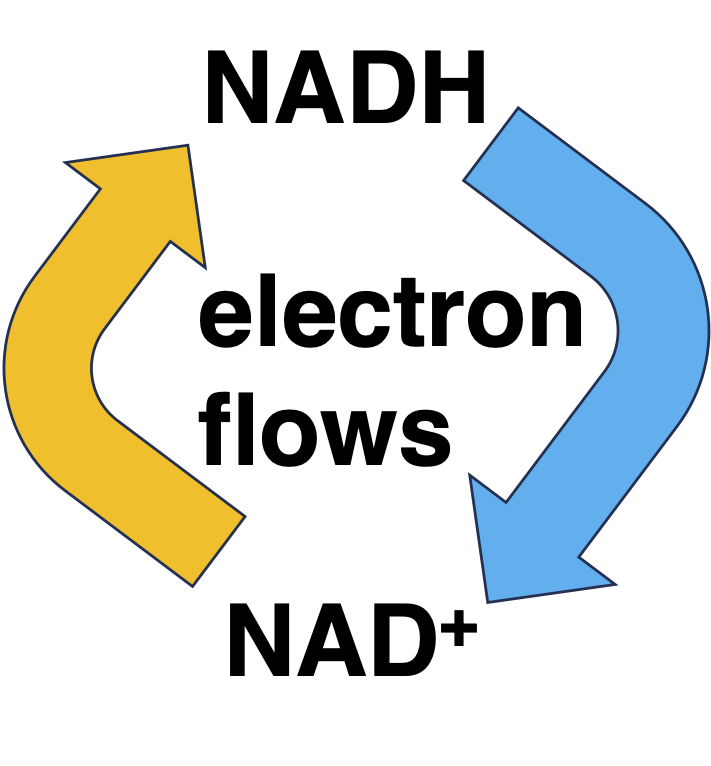
The overall cell metabolism equates to a redox reaction, involving an electron donor and an electron acceptor. This is as conserved as each cell having a DNA: it is valid for all cells studied from bacterial to human. In the case of human cells, the electron donor is glucose and the electron acceptor is oxygen. These cells actually couple oxidation of glucose with reduction of oxygen. In other words they "strip off" electrons from glucose and ultimately "dump" those electrons onto oxygen. Of course, this is true for the "overall reaction", which is not happening in reality as a single reaction. The cells use many individual redox reactions to achieve the overall reaction of glucose oxidation - oyxgen reduction.
Thus, cell metabolism is about "flowing electrons". Because there is no one redox reaction that can couple the acceptor and the donor directly, cells have many redox reactions in between and we call the totality of these different reactions metabolism. As cells have many individual redox reactions inside the cell, they have "invented" specialised "carrier" metabolites to connect these different redox reactions. Most well known of these is the NAD+-NADH pair, where NAD+ can accept electrons (to turn into NADH) and NADH can donate them (turning into NAD+). The cycling of this pair is coupled with different redox reactions within metabolism, sometimes receiving electrons, sometimes donating them.
Cells, especially microbial cells, can utilise many different compounds as initial electron donor and final electron acceptor and not just the Glucose-Oxygen pair, we mentioned. The fact remains, however, that all possible cellular metabolisms - as an overall process - map onto a redox reaction between an initial electron donor (i.e. a source) and final electron acceptor (i.e. a sink). Donors can be organic compounds such as various sugars like Glucose or organic acids like lactate, or they can be inorganic compounds, like iron or even hydrogen. Similarly, acceptors can also be organics, like pyruvate, or inorganics, like oxygen and nitrate. This website provides a diagrammatic, interactive tool listing common, microbial growth-supporting overall metabolism as electron donor and acceptor pairs.
Get involved! Click the interactive figure link to explore known cellular metabolisms. To learn more about the redox tower and provide feedback, visit our sister website following the links on the right.
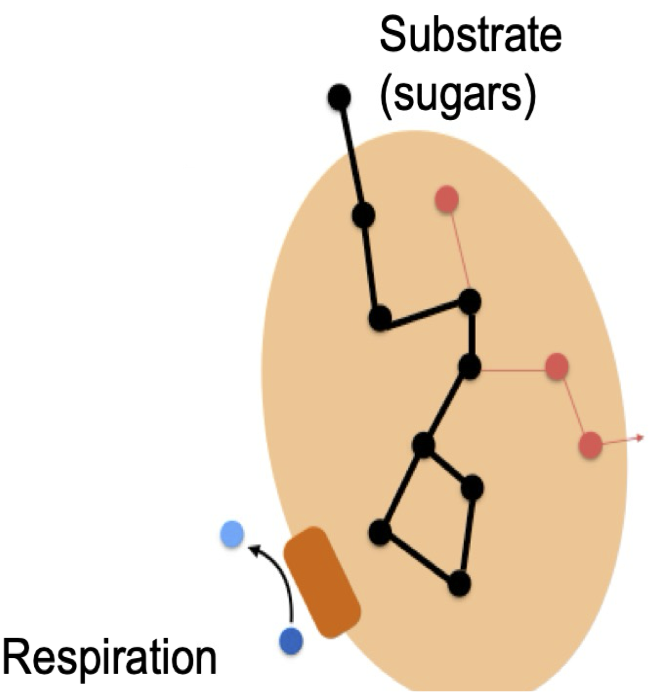
Learn more about the redox tower and how it enables researchers to study microbial physiology. This links takes you to our sister page with more details. There, you can also leave feedback, make suggestions, or get involved to help growing this tool and the website.
Interactive figure showing common metabolic electron flows. This link takes you to our interactive tool, where you can explore different redox half reactions and how they couple.
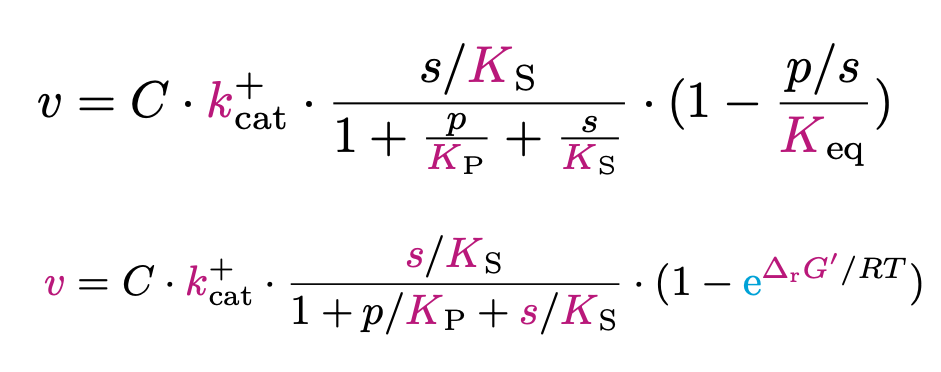
Details of thermodynamic calculations for the redox reactions. This link takes you to our sister page with worked out examples of how to use the Redox Tower.